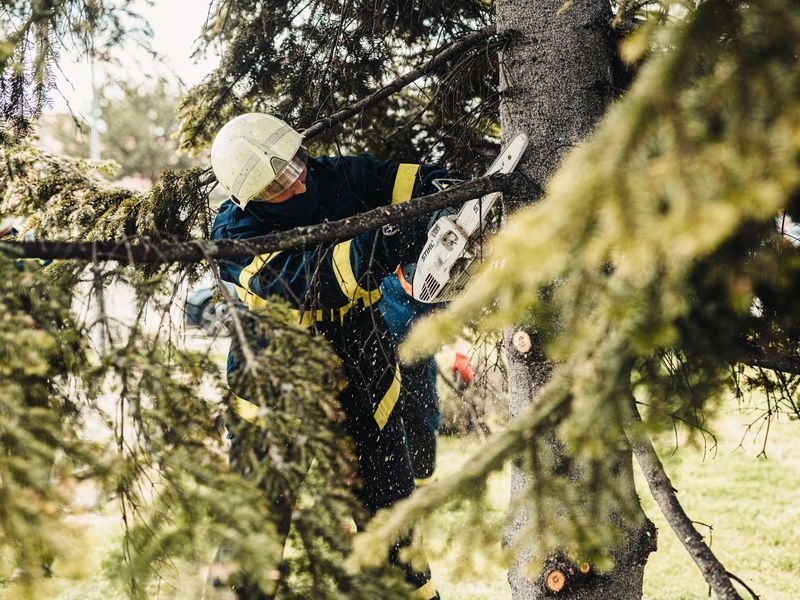
Winter can make routine tree work easier to schedule, but there is no single best month for every Silver Spring yard. Weather, soil conditions, tree health, and local rules all shape the right timing.
For a stable tree that is not an immediate hazard, late fall through winter is often a practical time to arrange removal. Deciduous trees have dropped their leaves, which can make the structure easier to see. Frozen or firm ground may also reduce damage to lawns, though Montgomery County winters do not guarantee frozen soil.
Winter scheduling is not a rule or a safety shortcut. Ice, high winds, snow, and short daylight can delay work. Ask the contractor to assess the tree and yard conditions rather than assuming a winter date will always be best.
Silver Spring gets rain through the year, and spring can leave soil soft just as crews are trying to reach trees with equipment. Heavy machinery on saturated ground can rut a lawn or compact soil. In a tight yard, ask whether the crew can use a smaller machine, protective mats, or a different access route.
Summer work may be affected by heat, thunderstorms, and sudden downpours. The National Weather Service Baltimore/Washington office tracks regional weather and storm hazards. A crew should postpone work if wind, lightning, or unsafe ground conditions make the job risky.
The Washington, DC area has had major storm impacts in recent years, including the June 29, 2012 derecho and the remnants of Hurricane Ida in September 2021. These events brought damaging winds, heavy rain, and, in some places, flooding. Local impacts vary from block to block, but they are a reminder that a damaged tree may need attention at any time of year.
After a storm, look from indoors or a safe distance for a fresh lean, a split trunk, hanging branches, or exposed roots. Keep people away from the drop zone and never cut a limb tangled with power lines. Report electrical hazards to the utility or emergency services as appropriate, then arrange a qualified tree assessment.
Silver Spring yards can have compacted soils, clay-rich patches, slopes, and drainage trouble; conditions vary even between neighboring lots. Near Sligo Creek and other low-lying areas, wet ground after prolonged rain can make access difficult. A tree’s roots also spread beyond the visible trunk area, so avoid parking heavy equipment over them without discussing protection with the crew.
Before work, point out soggy spots, steep slopes, buried irrigation, septic features, and narrow gates. Ask how the crew will get equipment in and where branches and logs will be staged. If the soil is waterlogged, waiting a few days may prevent avoidable lawn and soil damage.
A healthy tree that is being removed for a renovation can usually be planned around access, weather, and any required county or municipal approval. A dead, cracked, or unstable tree is different. Do not delay urgent professional advice just to reach winter or the dormant season.
Before setting a date, check with Montgomery County Department of Permitting Services about applicable tree rules, and with your municipality if the address is inside a city. Then ask the contractor what weather or ground conditions would cause a postponement. Good timing protects both the crew and your property.
Also in our network: Best Time for Tree Removal in Iowa City: Seasonal Guide, Best Time for Tree Removal in Rockford, IL.
Send us a few details and a photo and we will get you a free quote.
Get my free quote SILVER SPRING